Abelardo de la Espriella: the tiger who promises order
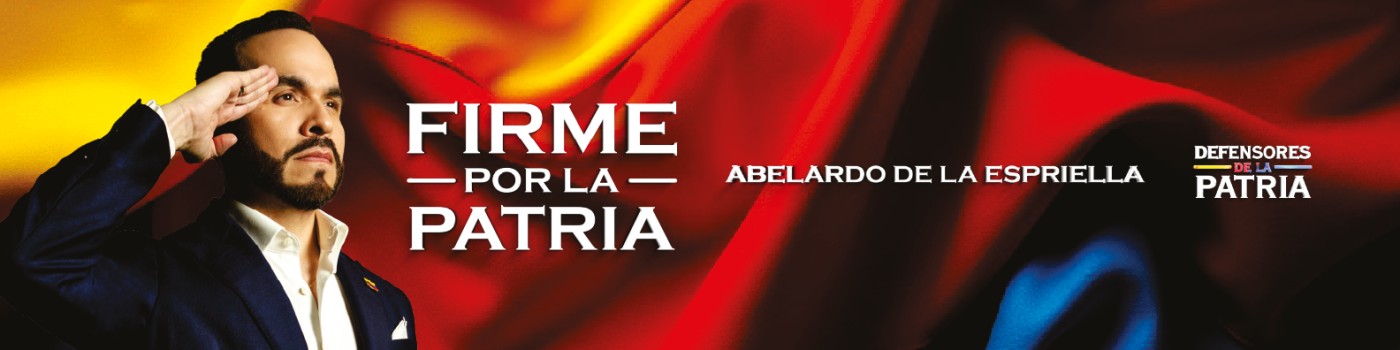
Abelardo de la Espriella won the first round of Colombia's presidential election on May 31, 2026, according to the preliminary count. That matters, but it is not the most interesting thing about him. The better question is: what kind of politician is now suddenly this close to the Casa de Nariño?
My short answer: De la Espriella is not a normal outsider. He is a powerful insider who sells himself as one. A criminal defense lawyer who turned court cases into media battles. A businessman who uses luxury as political evidence. A campaign product that compresses order, faith, masculinity, and anger into one tight brand. And yes: he belongs to the same family of political style as Donald Trump, Nayib Bukele, and Javier Milei, even if the Colombian context is different.
I am not writing that with a neutral little smile from the stands. I have a deep dislike for the Trump-Bukele model: politics as personal power, short-term spectacle, rewarding friends, shrinking critics, and treating institutions as annoying pieces of furniture. But that is exactly why the analysis has to be better than shouting. If you only say they are idiots, you may be right on a Friday night, but you still do not have an explanation on Monday morning.
And De la Espriella demands an explanation.
The hunger for order is real
To understand De la Espriella, you have to start with something uncomfortable: his message works because it speaks to a real fear. Colombia has a security problem that cannot be solved with a friendly workshop and three new dialogue tables. Armed groups control territory. Extortion is not an abstract risk for many business owners and citizens. The coca economy keeps running. Petro's "paz total" has not delivered what the name promised.
De la Espriella saw that opening. His answer is hard and easy to grasp: no more peace processes, military pressure, mega-prisons, renewed coca fumigation, closer cooperation with the United States and Israel, and a security approach he presents as "Seguridad Democrática 2.0" (Acosta, 2026a; AFP, 2026; Villa Román, 2026).
That is the strength of his story. Not that all of it is feasible. Not that all of it is wise. But it sounds like action in a country where many people mostly feel exhaustion.
"In my government, there will be no peace processes."
— De la Espriella, Reuters (Acosta, 2026a)
That is not a nuanced security strategy. It is, however, a sentence that lands immediately with people who believe the state too often talks when it should protect.
That is also where my discomfort starts. You cannot dismiss the need for order as stupidity or a fascist reflex. Security is not a right-wing hobby. But once a politician sells security as a blank check to weaken counterpower, human rights, and criticism, a legitimate demand turns into a dangerous offer.
A lawyer of power, not a man from outside
De la Espriella likes to call himself independent. Formally, he has room to do so: he has never held public office. But that does not make him an outsider.
His father, Abelardo de la Espriella Juris, was active in Córdoba politics, ran for governor, and held public positions (Redacción El Tiempo, 1997). The son grew up in Montería, studied law at the conservative Universidad Sergio Arboleda, and built his own law firm from 2002 onward (Torres García, 2026). His career did not run through ministries or mayor's offices. It ran through courts, media, wealthy clients, and powerful networks.
La Silla Vacía describes him as someone who turned the legal and media defense of controversial clients, luxury, public intimidation, and proximity to uncomfortable powers into a personal brand (León et al., 2026). El País calls him a criminal lawyer of "controversial causes," both in court and in the media (Osorio & Martín, 2026). El Espectador lists a career with very different cases: David Murcia of DMG, Álex Saab, parapolitical figures, Álvaro Uribe, but also victims such as Natalia Ponce de León (Torres García, 2026).
That last point should not disappear. An honest profile should not flatten him. He has also worked on cases that are widely seen as socially valuable. But the pattern in the sources is clear: De la Espriella moves comfortably through conflict, money, visibility, and intimidation. He was not outside power. He was only outside elected power.
That difference matters.
The campaign as a brand product
De la Espriella is not theatrical by accident. His campaign is designed as a performance. La Silla Vacía describes events with lights, smoke, tiger videos, jingles, military salutes, and fixed interaction with the crowd. The candidate does not appear only with proposals, but with a ritual: "Firme por la patria," the tiger, the enemy, the rescue (León et al., 2026).
"Here is your tiger, the one that roars and bites."
— De la Espriella, La Silla Vacía (León et al., 2026)
That may look superficial, but it is actually substantive. In this kind of politics, style is not packaging around the product. Style is the product.
Andrew Postman wrote in The Guardian about his father Neil Postman's warning in Amusing Ourselves to Death: modern politics becomes dangerous not only when information is banned, but also when public attention drowns in entertainment, images, speed, and stimulus (Postman, 2017). That is a useful lens for De la Espriella. He does not first have to drag voters into a 180-page policy program. He mostly has to evoke a feeling that works better than a policy program: finally, someone who dares.
That is also the Trump lesson. Trump showed that political seriousness is not always rewarded. Attention is rewarded. Repetition is rewarded. Insult is rewarded. A simple enemy image is rewarded. Frankwatching analyzed in 2016 how Trump consistently used simple language, emotional words, shock, reframing, and attacks from opponents to his advantage (Van der Burg, 2016). You do not have to believe De la Espriella is literally working from the same handbook to see the pattern.
He keeps it simple too. The country is sick. The left-wing elite is the enemy. The state is too big. Criminals understand only force. Anyone who criticizes him is often part of the problem. And he, the tiger, is the answer.
"Ladies and gentlemen of the left, in me you will have a sworn enemy..."
— De la Espriella, France 24 (France 24, 2026)
That does not work despite the exaggeration. It works partly because of the exaggeration.
Trump, Bukele, and the temptation of the quick hit
De la Espriella does not openly admire or imitate everything, but he does position himself inside a recognizable international family. France 24 describes him as an admirer of Trump, Milei, and Bukele. Reuters points to the comparison with Bukele, including the promise of mega-prisons and hard repression against crime (Acosta, 2026b; France 24, 2026). El País sees him as a radical-right candidate who has most effectively taken up the banner of hard opposition to the left (Stacey, 2026).
The Bukele model is tempting because it promises fast, visible results: calmer streets, criminals locked up, a popular leader, criticism dismissed as whining from human rights groups. But that is exactly the problem. The state becomes a machine for visible order, while questions about rights, mistakes, arbitrariness, prison conditions, and concentrated power fade into the background. It is short-term politics with a long shadow.
With Trump, the lesson sits at another level: not only what he promises, but what his promises do to institutions. In De Correspondent, Rob Wijnberg summarizes the warning through Masha Gessen's rule for emerging authoritarianism: believe the autocrat; he means what he says (Wijnberg, 2024). Thomas Zimmer makes a similar point about Trump: the danger is not only temperament, but the plan to fill the state with loyalists, punish opponents, and place independent bodies under political control (Zimmer, 2023, 2024).
That does not mean Colombia automatically becomes the United States, or that De la Espriella is Trump with better suits and more vallenato in the background. Analogy is not a copier. But the warning is relevant: take authoritarian language seriously before it becomes policy.
De la Espriella has proposed shrinking the state by 40 percent, eliminating almost half the ministries, pulling Colombia out of international organizations such as the UN, the OAS, and the inter-American human rights system, and governing with emergency tools to act quickly (León et al., 2026; Redacción Semana, 2025a, 2025b). His defenders will say: that is decisiveness. My question is simpler: what brakes are left when decisiveness becomes the highest political good?
"Easy: we send no one."
— De la Espriella on representation at the UN, Semana (Redacción Semana, 2025b)
Democracy is not only about winning votes. Democracy is also about what you are not allowed to do after you win.
The moral turn: from devil's advocate to defender of the patria
One of the most fascinating parts of De la Espriella is his moral repackaging. For years he was the lawyer who did not avoid difficult, dirty, or socially loaded cases. He sometimes defended that role with an almost provocative view of the profession: law stands apart from moral comfort.
"Ethics has nothing to do with law."
— De la Espriella, El País (Osorio & Martín, 2026)
Now he presents himself as a defender of God, family, order, and patria. According to La Silla Vacía, he went from declared atheist to visibly Catholic, with a campaign in which Christian networks, religious language, and moral struggle play an important role (León et al., 2026). El País describes him as a far-right candidate who also opposes abortion rights and adoption by same-sex couples, and points to misogynistic and homophobic comments during the campaign (Osorio & Martín, 2026).
"old-school feminist"
— De la Espriella about himself, La Silla Vacía (León et al., 2026)
This is not a small detail. It turns his politics into more than a security program. It becomes a story about who does and does not belong to the moral community. The "patria" is then not just a country. It is a purified us. Anyone outside it quickly becomes suspect: leftist, progressive, journalist, judge, NGO, international organization, feminist, "mamertería," whatever the label of the day happens to be.
That is exactly why the Trump comparison is useful. Benjamin Wallace-Wells wrote after Trump's 2016 victory that the real question was not only how journalists and pollsters missed it, but how millions of people could see him as their champion (Wallace-Wells, 2016). The same applies to De la Espriella. His appeal is not only in policy. He offers his supporters an emotional role: you are not backward, you are the real nation; you are not afraid, you are awake; you are not harsh, you are finally honest.
That is powerful. And dangerous.
The uncomfortable networks
De la Espriella's biggest vulnerability is not that he had controversial clients. A lawyer may defend controversial clients. That is not a scandal. That is the rule of law.
The question is what his career and business environment say about his relationship with power.
Semana published questions from Daniel Coronell as early as 2006 about Fipaz, the referendum project against extradition, and the sudden business leap of De la Espriella's young law firm (Coronell, 2006). La Silla Vacía reconstructs his role around Ralito, his defense of parapolitical clients, DMG, and Álex Saab, while also stressing that investigations against him in several matters have been closed or that he denies the accusations (León et al., 2026).
Vorágine published two recent investigations into his business environment. The first concerns a plot of land in Becerril, Cesar, that De la Espriella bought in 2013 and that, according to Vorágine, came from a division of land within the family of Hugues Rodríguez Fuentes, alias "Comandante Barbie," a man convicted in Colombia for promoting paramilitary groups (Flórez, 2026). The second concerns Elisa Rodríguez, a shareholder in the company behind Ron Defensor, who according to Vorágine had business ties to a convicted money launderer and is related to the same Hugues Rodríguez (Vorágine, 2026a).
On top of that, a journalistic alliance published an investigation on May 31 into an unsecured campaign database of Defensores de la Patria. According to that alliance, the database contained 1.4 million records, including thousands of possible public employees and hundreds of police-related email addresses. The researchers explicitly wrote that it is not certain whether all registrations were voluntary, because the system lacked proper identity verification (Alianza periodística, 2026).
This does not prove that De la Espriella is personally guilty of every problem around him. That is not how this should be read. It does show something politically relevant: the man who promises to sweep Colombia clean comes from a world where power, money, legal aggression, and questionable proximity constantly overlap.
If you wave a broom around, you should not be afraid of the dust under your own cabinet.
The press as a hostile power
A leader who wants to govern hard has to tolerate scrutiny especially well. With De la Espriella, that is exactly where doubts begin.
Americas Quarterly reports that between 2008 and 2019 he filed more than one hundred complaints for injuria and calumnia, according to Colombia's press freedom organization FLIP (Ávila, 2026). La Silla Vacía describes a broader strategy of civil claims, criminal complaints, public attacks, and financial pressure against journalists and critics (León et al., 2026). El País writes that during the campaign he easily appears in friendly media, but more often frames critical media as lying or hostile (Osorio & Martín, 2026).
"Nothing hurts that independent journalism more than its pocketbook."
— De la Espriella, La Silla Vacía (León et al., 2026)
That pattern fits the international authoritarian playbook too well to dismiss it as personal irritability. Trump calls the media enemies. Bukele uses popularity to make criticism look suspicious. De la Espriella does not have to copy that model exactly to move in the same direction: journalism then stops being democratic oversight and becomes an obstacle in the leader's story.
And that is exactly where my distrust begins. Not with every hard security measure. Not with every right-wing economic view. But with the combination of hard power, personal glorification, enemy thinking, and a bad temper toward scrutiny.
Why he works
Still, it would be too easy to end with: Colombia has lost its mind. That is lazy, and it is not true.
De la Espriella works because he brings together things that are floating around separately in Colombia: fear of crime, anger at Petro, nostalgia for Uribe's promise of order, religious mobilization, dislike of progressive culture, distrust of the state, fatigue with technocratic language, and the appeal of wealth as proof of competence. La Silla Vacía calls his rise a sign that Colombia is entering the populist phase with two faces: the left with subsidies and wage increases, the right with the miracle of security and fatherland (Pacheco, 2026).
That is sharply put. De la Espriella is not an accident. He is a symptom.
He offers voters not a policy package, but an emotional ordering of the world. On one side: criminals, communists, bureaucrats, corrupt elites, journalists he says are lying, international clubs that hold Colombia back. On the other: patria, family, God, entrepreneurs, soldiers, police, "the people who have never lived off the state."
That worldview is easy to read. It is orderly. You no longer have to live with tragic complexity. Everything gets a place. Everyone gets a label. And at the top stands a man who promises that he will dare.
But countries are not campaign videos. They are slow, stubborn, and complicated. Anyone who pretends one strong man can burn that complexity away is usually not selling a solution. He is selling numbness.
My problem with Abelardo
My problem with De la Espriella is not that he is right-wing. Colombia may choose a right-wing president. My problem is also not that he centers security. Colombia needs security.
My problem is that his political style looks too much like what has already caused damage elsewhere: the leader as brand, the state as an instrument of personal will, the press as enemy, the judge as obstacle, international human rights as leftist ballast, the opponent as existential danger, and the voter as an audience that mainly receives confirmation and spectacle.
Trump and Bukele show how attractive that model is. They also show what it costs. It produces fast images: the strongman, the locked-up enemy, the humiliated opponent, the cheering crowd. But meanwhile the norm shifts. Less doubt. Less scrutiny. Less patience with minorities. Less truth. More loyalty.
The danger is not in one stray statement or one hard measure. It is in the pattern. Believe leaders when they say they want to remove the brakes. Believe them when they treat journalists as enemies. Believe them when they respect institutions only as long as those institutions cooperate. Do not wait until everything is legally polished before recognizing the authoritarian pattern.
De la Espriella is therefore not just a candidate. He is a test. Not of left versus right, but of Colombia's democratic immune system: can a country take real security fear seriously without handing itself over to a man who has turned order into a personal brand?
There is no easy answer to that question. But I know this much: anyone who wants to save democracy by loosening its brakes is asking for too much trust. Especially when he wants to be the one behind the wheel.
References
Acosta, L. J. (2026a, February 11). Colombia's 'outsider' candidate De La Espriella vows military crackdown to boost economy. Reuters.
Acosta, L. J. (2026b, May 28). Colombia presidential candidate De La Espriella proposes mega-prisons, crime crackdown. Reuters.
AFP. (2026, February 11). Colombia election favorite vows US-backed strikes on narco camps. France 24.
Alianza periodística integrada por Cuestión Pública, Vorágine, Rutas del Conflicto, El Veinte y CLIP. (2026, May 31). En campaña de De la Espriella hay miles de funcionarios inscritos, incluyendo policías activos. Vorágine.
Ávila, R. (2026, February 11). Colombia's Bukele? Abelardo De La Espriella surges ahead. Americas Quarterly.
Coronell, D. (2006, August 19). El apoderado. Semana.
Flórez, J. (2026, February 15). La tierra de un narcoparamilitar que pasó a manos de Abelardo de la Espriella. Vorágine.
France 24. (2026, May 26). Admirador de Trump, Milei y Bukele: así es Abelardo de la Espriella. France 24.
León, J., Ortiz, J., & Mejía, E. (2026, May 29). Abelardo de la Espriella, una marca importada para la época. La Silla Vacía.
Osorio, C., & Martín, M. (2026, June 1). Abelardo de la Espriella, el abogado del diablo que quiere ser presidente de Colombia. El País.
Pacheco, D. (2026, May 31). Habrá segunda vuelta: Abelardo y Cepeda se enfrentarán el 21 de junio. La Silla Vacía.
Postman, A. (2017, February 2). My dad predicted Trump in 1985: It's not Orwell, he warned, it's Brave New World. The Guardian.
Redacción El Tiempo. (1997, October 13). Estoy invocando la solidaridad. El Tiempo.
Redacción Semana. (2025a, November 16). Abelardo de la Espriella dice que eliminaría casi la mitad de los ministerios. Semana.
Redacción Semana. (2025b, November 16). Abelardo de la Espriella anuncia que, si es presidente, retirará a Colombia de la ONU, la OEA y la CIDH. Semana.
Stacey, D. (2026, May 26). The far right takes flight in Colombia under Abelardo de la Espriella. El País English.
Torres García, N. (2026, April 24). Este es Abelardo de la Espriella: el polémico abogado que busca la Presidencia como outsider. El Espectador.
Van der Burg, V. (2016, May 6). Psychologische trucs & hypnose: hoe Donald Trump de verkiezingen wint. Frankwatching.
Villa Román, E. (2026, May 31). Las propuestas de Abelardo de la Espriella: seguridad total de "mano dura" y el crecimiento económico acelerado. El País.
Vorágine. (2026a, May 30). La socia de Abelardo que hizo negocios con un lavador de la mafia. Vorágine.
Wallace-Wells, B. (2016, November 9). Who believed in Trump, and who is to blame. The New Yorker.
Wijnberg, R. (2024, November 6). Met Donald Trump kiest Amerika voor de autoritaire antidemocraat. Laat dat een indringende waarschuwing zijn. De Correspondent.
Zimmer, T. (2023, December 8). Donald Trump, American dictator. Democracy Americana.
Zimmer, T. (2024, November 14). Why the second Trump regime will be far more dangerous. Democracy Americana.
AI disclosure
AI was used as support in drafting and editing this blog article, including structure, wording, and consistency checks. The substantive choices, personal perspective, source interpretation, final editing, and responsibility for the final text remain with the author.